

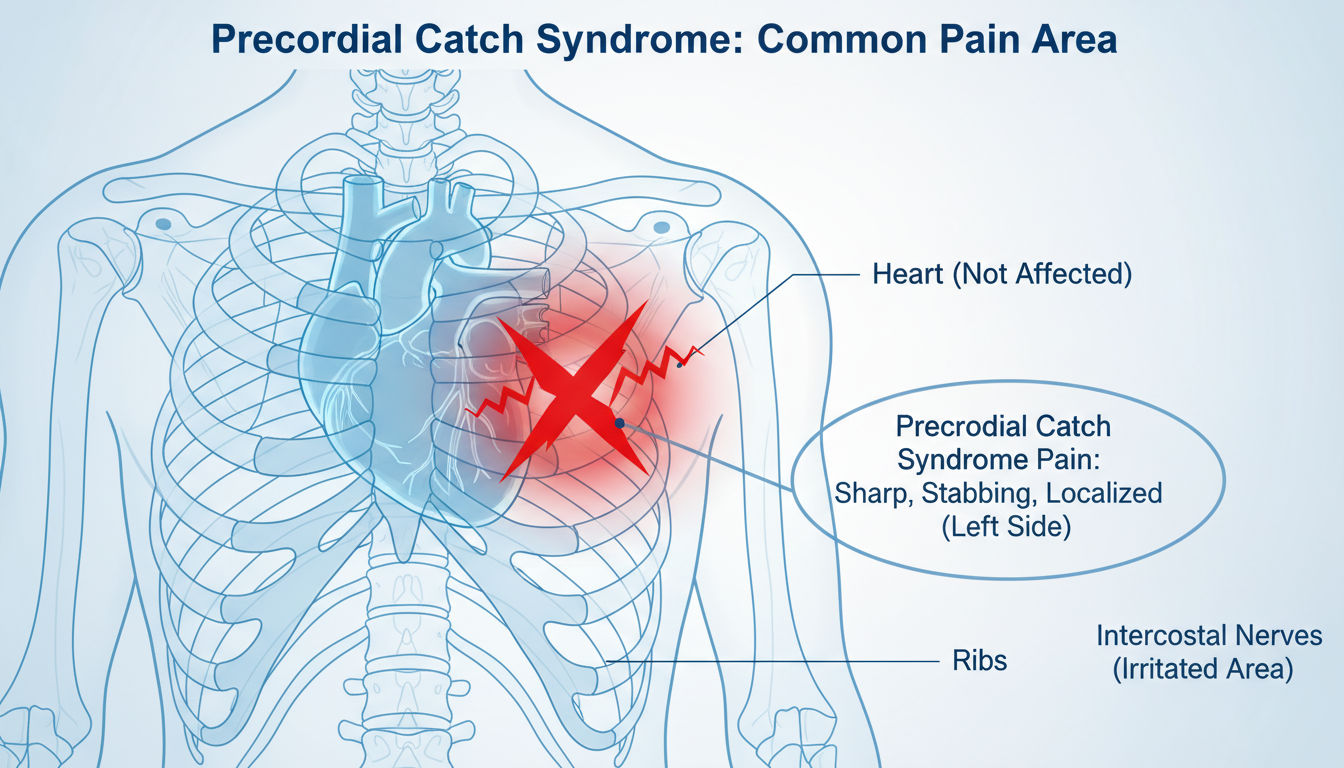
Sharp, fleeting chest pain can spark instant panic—but when it comes on suddenly and goes just as quickly, without other concerning signs, it very well might be something called Precordial Catch Syndrome (PCS). Despite the alarming sensation, PCS is typically harmless, though undeniably unsettling. This article delves into what PCS is, explores its likely causes, highlights symptoms you might notice, offers relief techniques that real people swear by, and underscores why reassurance is often the best remedy.
Understanding Precordial Catch Syndrome
What Is PCS?
Precordial Catch Syndrome is characterized by a sudden, sharp, stabbing pain on the left side of the chest, often described as feeling like a knife’s prick—yet it fades in seconds or at most a few minutes . This pain strikes when you’re at rest or in a relaxed posture and doesn’t radiate elsewhere, distinguishing it from more serious conditions like angina or pericarditis .
Who Experiences It?
PCS predominantly affects children between ages 6–12, teenagers, and young adults . Yet there are plenty of accounts from older adults—some in their 20s, 30s, even 40s—experiencing it occasionally . The important part is, while it’s common, it’s not serious or dangerous.
Causes and Triggers
The Mystery of the Cause
Although the exact cause remains unclear, medical experts speculate that PCS may stem from irritation of the nerves lining the chest wall or pleura, or from muscle spasms in the ribs or cartilage . Episodes often coincide with poor posture—slouching while watching TV or sitting—suggesting a potential mechanical trigger .
A notable possible influence is rapid growth; teens undergoing growth spurts might experience more frequent episodes .
Emotional and Physical Triggers
Stress or anxiety may correlate with PCS episodes, even though the pain isn’t psychosomatic . Many testimonies highlight how poor posture or tension—especially after long hours sitting hunched—can increase vulnerability to an episode .
Identifying PCS Symptoms
Hallmark Symptoms
The classic signs of PCS include:
- Sudden, intense pain localized to a very small area—often below the left nipple
- Excruciating with deep breathing, prompting many to catch their breath or breathe shallowly
- Lasts from a few seconds to up to three minutes, after which normal breathing and comfort return
- No other symptoms—no nausea, sweating, or radiating pain
Why It’s Often Misunderstood
The abrupt, sharp nature of PCS pain often leads to fear of heart issues, especially when symptoms occur near the heart . Yet since it’s benign, the real harm is anxiety—which, ironically, can intensify the episode .
Diagnosis and When to Seek Help
How Clinicians Confirm PCS
Diagnosis typically involves a healthcare provider reviewing symptoms, medical history, and conducting a physical exam—listening to heart and lungs, and checking for tenderness . Tests like EKG, chest X-ray, or echocardiogram are only pursued if other symptoms suggest another issue .
When to Take PCS Seriously
Though PCS is benign, chest pain should never be ignored. Seek medical attention if the pain:
- Persists longer than five minutes
- Is accompanied by dizziness, rapid heartbeat, sweating, nausea, or pain radiating to the arm, jaw, or back
Relief Strategies: What Works and What Doesn’t
Standard Advice from Medical Sources
- Changing posture—sitting or standing up straight—can alleviate symptoms
- Taking slow, relaxed breaths may help the pain dissipate; some find that one or two deep breathes—painful though it may feel—can trigger relief
- Stretches or yoga to open the chest muscles may reduce future episodes
- Pain relievers like ibuprofen may be used for discomfort, though pain typically resolves faster than medication acts
Real-World Tricks from People with PCS
Some individual strategies stand out—simple, quirky moves people swore helped:
“I found that clasping my hands behind my back, opening my chest, actually stopped the attack.”
“Bending over, touching toes, then breathing in—as soon as I stretch like that, poof, it’s gone.”
And hydration? Funny enough, some say just drinking water—especially while bending over—brought relief . While anecdotal, these illustrate the diversity of simple, low-risk coping tactics.
Real-Life Context and Emotional Impact
PCS isn’t just a medical note—it shows how physical symptoms can create big emotional ripples, especially when felt near the heart. Think of a teen lying awake, holding their chest, heart pounding, convinced something’s gravely wrong. Only later to discover it’s “just PCS,” benign but emotionally exhausting.
It’s also an example of how posture, stress, and physical growth interplay—reminding us that pain doesn’t always mean danger, but still deserves understanding and empathy.
A Brief Historical Glimpse
The condition dates back well over a century—originally described in 1893 by Henri Huchard as “précordialgie” . It was later studied by Miller and Texidor in the 1950s—hence the nickname “Texidor’s twinge” . Reports throughout the decades, including in pediatrics research and case series, affirm it’s relatively common and benign .
Conclusion
Precordial Catch Syndrome—sharp, brief, chest pain—is alarming only in sensation. It’s neither dangerous nor linked to heart disease, and typically resolves on its own by adulthood. Posture, breathing habits, and sometimes growth spurts seem to play a part. While reassurance is the best medicine, simple stretches, position changes, and even anecdotes like bending forward or opening your chest can help in the moment. If pain strikes persistently or with danger signs, seeking medical evaluation is always wise. But for most, PCS is a fleeting oddity—painful, yes—but harmless.
FAQs
What exactly is Precordial Catch Syndrome (PCS)?
PCS is a brief, sharp, localized chest pain—usually on the left side—that appears suddenly at rest and dissipates within seconds or minutes without other symptoms.
Is PCS dangerous or related to heart disease?
No. It’s harmless and unrelated to heart or lung issues. The pain, though intense, doesn’t indicate a medical emergency.
Can posture or breathing influence PCS episodes?
Yes. Poor posture—like slouching—often precedes episodes, while stretching the chest or changing breathing patterns may help relieve or prevent them.
How long does a typical PCS episode last?
Usually from a few seconds to no more than three minutes, though rare cases may linger slightly longer. If pain persists beyond a few minutes or comes with other symptoms, consult a healthcare provider.
Should I see a doctor about PCS?
If the pain is isolated, brief, and without other symptoms, reassurance is usually sufficient. But if pain is prolonged, recurring frequently, or comes with concerning signs (like dizziness, breathlessness), it’s wise to get checked.
Do people outgrow PCS?
Most individuals experience fewer or no episodes by their 20s. The syndrome tends to diminish with maturity and improved body awareness.


















Leave a comment