

: What It Actually Means
Scholastic Latin honors feel like whispered badges of brilliance—magna cum laude translates to “with great honor.” It’s not just poetic flair; it’s a milestone recognizing academic achievement at many colleges and universities, especially across the U.S and Europe. Recognition often goes by lettered seals or embroidered cords at ceremony—those small details carry prestige, but the story behind them is even richer.
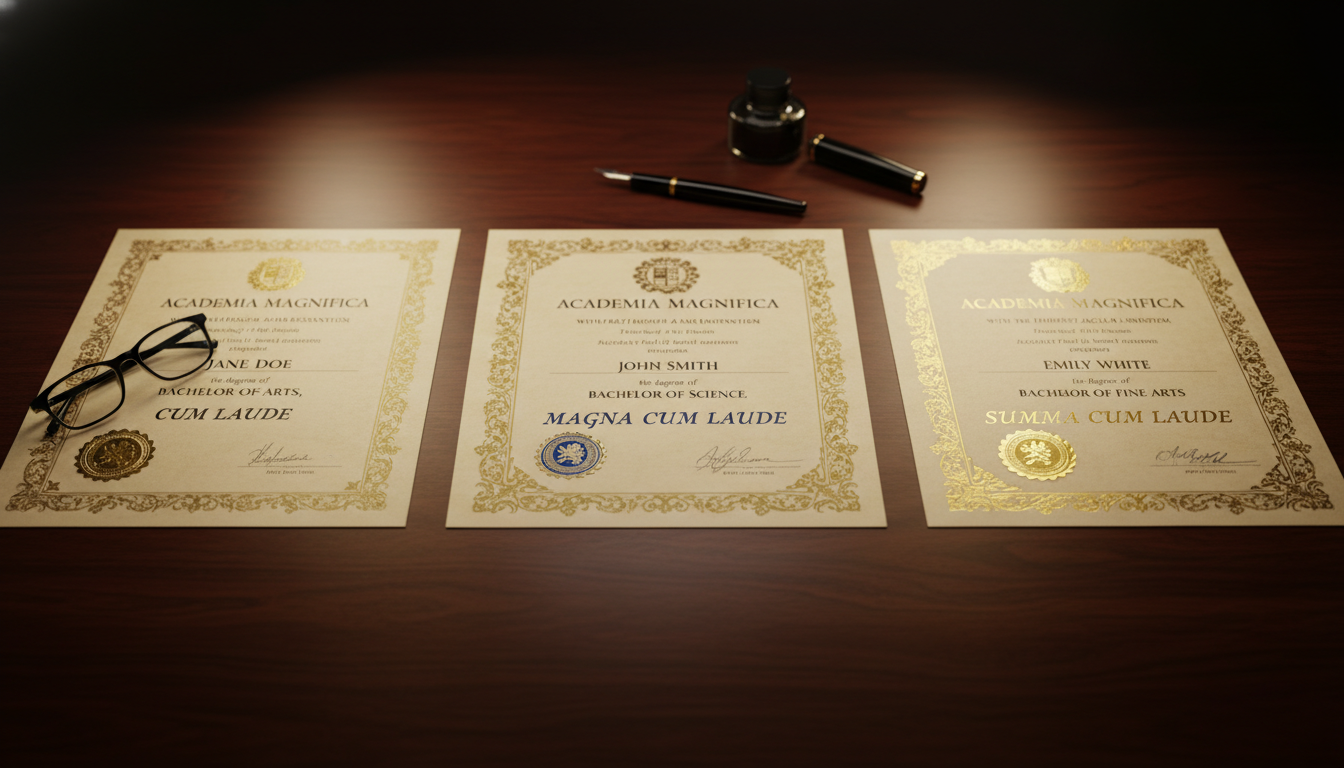
At its core, magna cum laude is the middle tier of Latin honors, respectable even if not the absolute peak. Generally, institutions rank honors as follows: cum laude (“with honor”), magna cum laude (“with great honor”), and summa cum laude (“with highest honor”). The specific threshold for magna cum laude can vary significantly—from around the top 5–15% of a graduating class to earning a higher GPA tier, typically something like a 3.7–3.9 on a 4.0 scale. Some schools, though, focus on fixed percentages instead of GPAs, so the meaning can shift depending on the campus culture and academic standards.
But let’s not gloss over context—some elite schools might set the magna bar higher; others may widen the net. It’s why if you’re weighing that shimmering Latin trio, details matter a lot. Yet across disciplines—humanities, sciences, professional programs—it tends to symbolize commitment to one’s studies, even if the exact GPA digits vary.
The Requirements Behind the Honor
GPA-Based vs. Class Ranked Criteria
The pathway to earning magna cum laude often hinges on GPA, but not always in the same way. In many American colleges, a consistent GPA—say, above 3.7—is your ticket. Yet others, particularly competitive and Ivy-adjacent schools, reserve Latin honors for a percentage of the class: so even a high GPA might not guarantee the honor if you’re outside that top tier.
This dual system means two students with identical GPAs could experience different outcomes depending on where they study. One might find magna cum laude in easy reach, while another barely misses the cut because peers are clustered near the same high GPA.
Departmental Nuance and Other Considerations
Beyond GPA or ranking, departments might sprinkle in additional expectations. Honors theses, capstone projects, or faculty nominations can tip the scales, especially where the distinction matters beyond just ceremony. For instance, one student in the sciences highlighted that regression analyses in their thesis gave them the final edge for magna over a classmate with slightly higher GPA but less research output.
Essentially, while GPA is the backbone, narrative evidence—like research contributions or leadership in academic projects—sometimes plays an unspoken role.
Academic and Career Significance of Magna Cum Laude
Earning magna cum laude often signals more than good grades—it communicates drive, serious work ethic, and a measure of academic distinction. This can matter at crucial junctures like:
- Graduate school applications, where honors can enrich your profile. Even if an exact GPA isn’t mind-blowing, the accolade adds context.
- Helpful in early-stage career moments—internship selection, job applications, or scholarship opportunities—where recruiters scan for standout indicators.
- Resumes and LinkedIn profiles benefit from the honor, especially in industries like consulting, finance, competitive fellowships, or academia. It adds clarity.
Yet, it’s not a guaranteed pass. Some workplaces may value internships, networking, or demonstrable skills more. So, it’s one piece in a mosaic of qualifications.
Real-World Example
Imagine two rising grads: Lara and Mateo both graduated with a 3.8 GPA, but only Lara received magna cum laude—her college ranked honors by set percentages and she happened to fall within the fortunate distribution. Meanwhile, Mateo’s school awarded magna cum laude more liberally, while another peer with even higher GPA missed due to class crowding. Their resumes now tell subtly different stories, even with similar academic performance.
Why It Matters—and Why It Sometimes Doesn’t
It’s easy to conflate Latin honors with future success, but nuance matters.
Pros of the Distinction
- Quick recognition of academic excellence and dedication
- Differentiation in competitive fields or academia-specific pathways
- Often aligned with other perks like honors societies or recognition awards
Limitations and Context
- Varies by institution—what’s magna at one uni could mean different at another
- Not a substitute for experience, soft skills or professional accomplishments
- An accent, not an anchor—nice to have, but not always the defining factor
Brief Quote from an Academic Advisor
“Latin honors like magna cum laude speak volumes about a student’s consistency, but the true value comes when they pair it with meaningful projects or real-world experience.”
Concluding Thoughts
Ultimately, magna cum laude is a marker of academic success—not the whole measure, but one that carries weight in many contexts. Whether you earn it through strict GPA thresholds, class rank, or additional scholarly work, it tells a story of effort and intellect. And yet, it sits among other important chapters of your academic journey—networks, internships, your final thesis, and beyond.
FAQs
What GPA is typically needed for magna cum laude?
While GPAs vary by institution, it’s often in the 3.7 to 3.9 range on a 4.0 scale—or within the top 5–15 percent of your class, depending on school policy.
Does every college offer magna cum laude honors?
Not all do—some institutions use different honor systems, or none at all. Check your school’s academic catalog or registrar’s office for their specific criteria.
Can honors requirements include more than GPA?
Yes, certain programs factor in research projects, capstone work, or faculty recommendations beyond just grades.
Does magna cum laude guarantee admissions or jobs?
It helps, certainly—it signals academic dedication. Still, admissions committees and employers often weigh experience, recommendations, and interview performance more heavily.
What’s the difference between cum laude, magna cum laude, and summa cum laude?
They are ascending tiers of Latin honors: cum laude (“with honor”), magna cum laude (“with great honor”), and summa cum laude (“with highest honor”). The requirements—whether GPA thresholds or class percentage—usually rise with each level.
Is a thesis required for honors?
Only in select programs. Some departments require a thesis or capstone, whereas many rely purely on GPA or class ranking.

















Leave a comment