

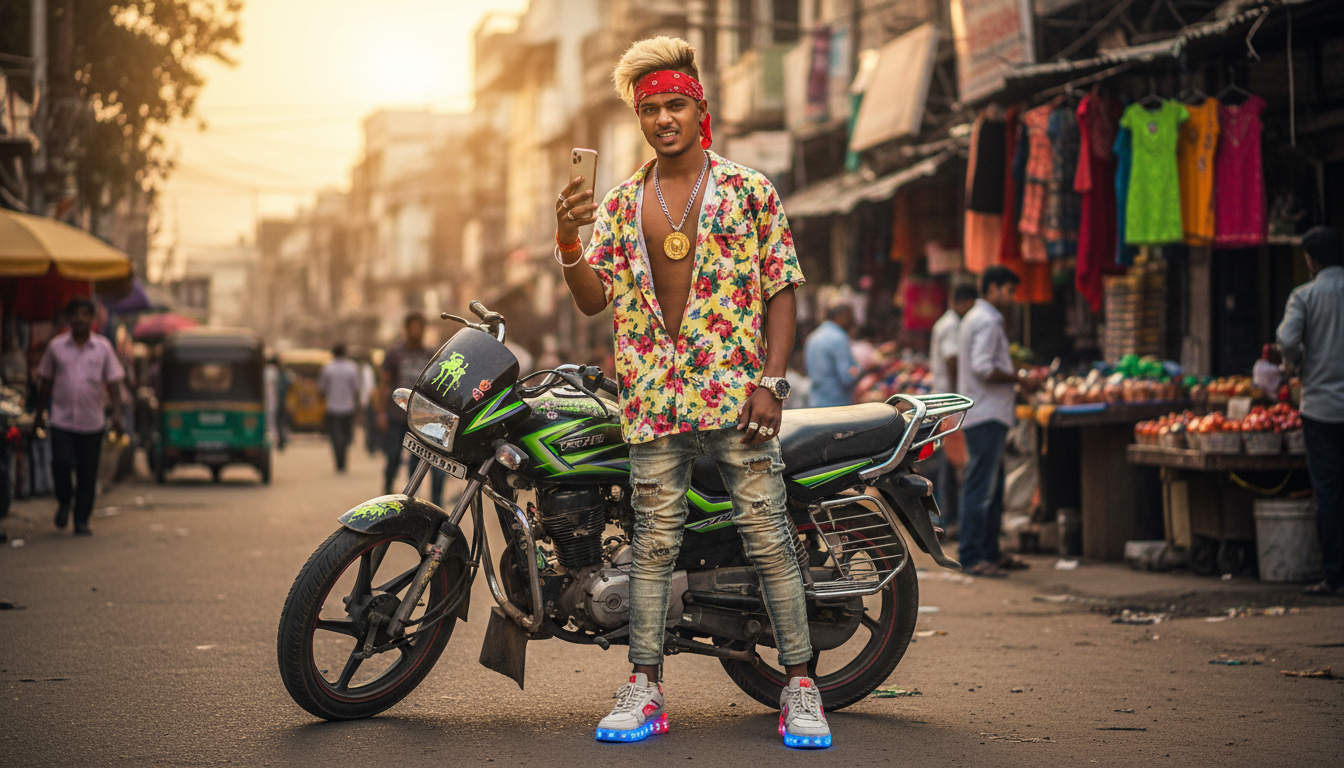
Language evolves in surprising ways, and sometimes a seemingly harmless slang word can carry layers of cultural weight. “What Does ‘Chapri’ Mean? Unpacking the Term” dives into this complex South Asian slang—how it’s used, what it communicates, and why it matters. Far from being just a casual insult, the word reveals undercurrents of class, caste, identity, and resistance in today’s digital culture.
Origins and Literal Meanings
Chapri in Geography and Etymology
While “Chapri” appears as the name of villages in Pakistan—such as in Mianwali (meaning “hut” or “thatched shelter”) —those usages stem from the literal reference to a dwelling or structure. In everyday Indian and Pakistani slang, however, the meaning has morphed into something that’s neither architectural nor benign.
Slang Translation and Connotations
Among youth vernacular, “chapri” most often refers to someone who is ostentatiously showy, cringeworthy, or attention-seeking—someone perceived as lacking taste or sophistication. Think of a flashy dresser, but without the style to back it up . It’s slang, often derogatory, used in a dismissive or mocking tone.
Cultural Dynamics and Social Significance
Caste & Class Roots
The term’s meaning extends beyond fashion or personality. It traces linguistically to “chappar” (thatched roof), linking it to the Chapparband caste—a historically oppressed community tasked with roofing. That origin transforms “chapri” from edgy youth slang into a potential casteist slur . Its casual use reflects entrenched social hierarchies and dismissive views toward marginalized communities.
Symbolic Violence Online
“Chapri” isn’t just an insult—it’s a gatekeeping tool. By labeling certain aesthetics or behaviors as “chapri,” dominant groups (urban, upper-class, upper-caste) demean styles that don’t align with their tastes. This reinforces exclusion in digital spaces under the guise of humor .
The Slang in Practice: Examples and Perspectives
Social Media & Popular Use
When bold fashion or loud internet behavior is mocked, someone’s likely being called “chapri.” Consider the case of celebrity Aly Goni joking about his partner Jasmin Bhasin as “chapri”—viewers criticized the term for its sting and its casual classism .
Resistance and Reclamation
Yet language holds potential for change. Artists like rapper MC Stan have reappropriated “chapri” in their lyrics and persona—turning a slur into a statement of pride, similar to how other marginalized groups have reclaimed hurtful terms .
Community Voices and Online Debate
Across forums, reactions are mixed. Some argue “chapri” has become a broader term for cringe or try-hard behavior, decoupled from caste or class . Others recognize its casteist weight and call for restraint or education .
Toward Understanding and Responsible Usage
A few critical points emerge:
- Language matters. Even casual slang can reinforce deep-rooted prejudices.
- Awareness transforms words. Understanding where “chapri” comes from reframes how—and whether—it’s used.
- Dialogue helps. Terms can evolve from mockery to reclamation, but only with intentional conversation and empathy.
“What starts off as an occupational reference becomes a caste-coded slur today.” This reminds us how historical inequalities persist, even in seemingly trivial language .
Conclusion
“Chapri” is more than a passing insult—it’s a reflection of society, digital culture, and historical marginalization. Deployed carelessly, it perpetuates deep structural bias. Yet, when reexamined and redefined, it can be reclaimed or rendered obsolete. In online communities especially, choices around language shape inclusion, identity, and respect more than we often realize.
FAQs
What does “chapri” mean in youth slang?
It typically describes someone who behaves or dresses in a flashy, attention-seeking, and often cringeworthy manner—low-class, trying too hard, or tacky.
Is “chapri” offensive?
Often, yes. Beyond being insulting, it can carry casteist or classist undertones rooted in historical oppression.
Where does the word come from?
Linguistically, it likely derives from “chappar” (thatched shelter) and is connected to the Chapparband caste, whose occupational identity gives the term a caste-coded history.
Can “chapri” be reclaimed?
Some artists have attempted to reclaim “chapri” with pride and irony. However, reclamation remains sensitive and not universally accepted.
Is the slang usage fading away?
It fluctuates. While still popular among youth online, increased awareness of its problematic roots could prompt more cautious or critical use.
How should one respond if called “chapri”?
It depends on context. Responding politely or educating others about the term’s source could foster empathy. In hostile cases, distancing yourself from disrespectful language is valid.















Leave a comment