
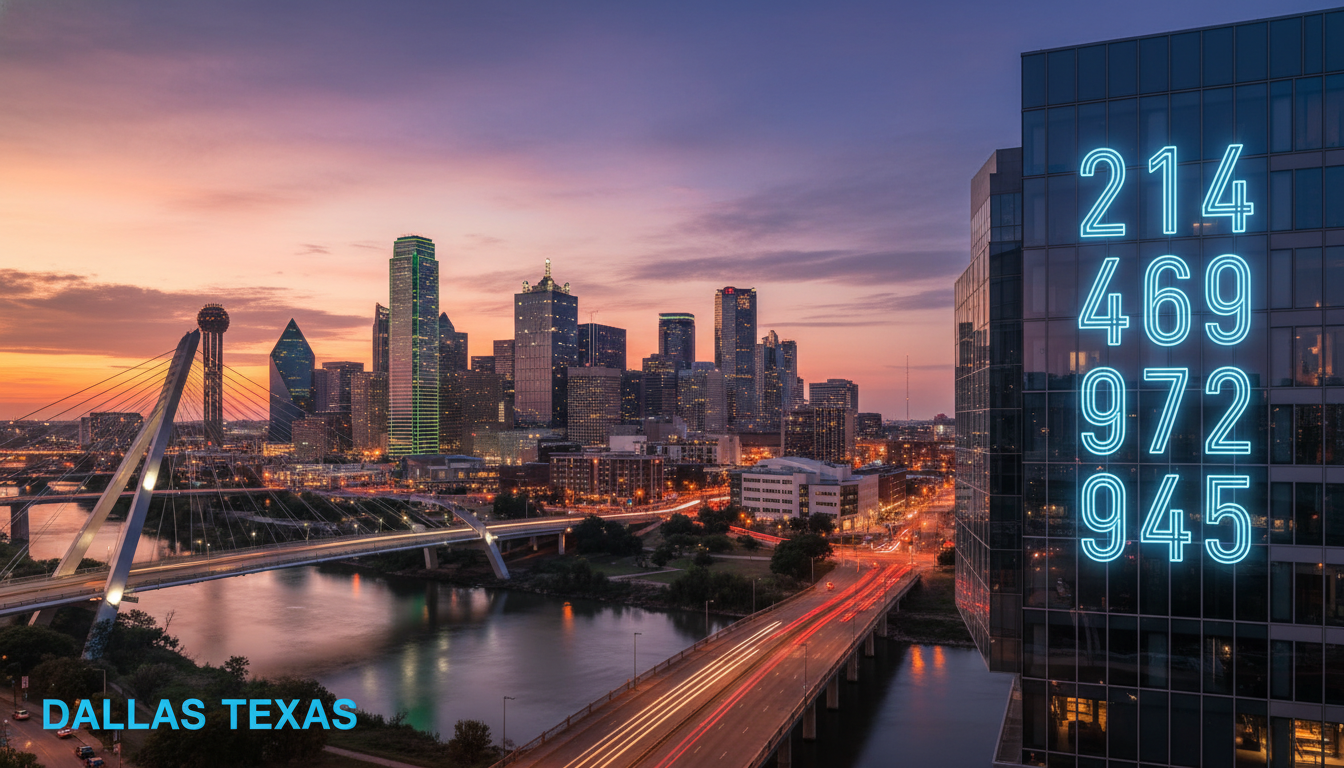
Getting into the world of area codes may feel a bit dry at first—okay, maybe more than a bit dry—but stick with me, it’s more interesting than you’d think. The 214 area code is a fascinating snippet of telecommunications history and urban growth, tangled in cultural shifts, tech changes, and local identity. Let’s untangle that a bit, walk through why 214 matters, and maybe have a slight chuckle or two at how phone numbers can feel more meaningful than we give them credit for.
Origins and Evolution of the 214 Area Code
The story begins in the early days of North American Numbering Plan (NANP), where area codes were first assigned in the late 1940s. 214 landed on the map in November 1947, designated to serve the entire region of northern Texas around Dallas. Back then, of course, phones were far less common, and the concept of needing more than one area code in a region seemed almost futuristic.
As Dallas blossomed—from oil booms to tech corridors—the demand for new numbers soared. By the late 1990s, exhaustion of available numbers within 214 was imminent, prompting a series of splits and overlays. The first major split carved out area code 903 in 1990, then 972 in 1996, eventually followed by 469 in 1999. This patchwork of codes might feel chaotic, but it underscores how urban growth and telecom planning must keep pace—sometimes retroactively. It’s like trying to reorganize bookshelves when the books keep arriving by the crate.
Geographic Reach Today
Now, 214 primarily covers Dallas proper, along with parts of surrounding suburbs. But let’s dig deeper—understanding the boundaries helps when you’re trying to decode call patterns, local identity, or even business strategy.
City Core and Suburban Spread
- Central Dallas: This is the heart, where iconic landmarks, Fortune 500 headquarters, and cultural nodes—think Deep Ellum, Uptown, and the Arts District—are located. Most businesses here still cherish 214 for its local prestige.
- Some suburban pockets: Parts of Highland Park and University Park dip into 214, creating a mosaic rather than a clean border.
Beyond that, you start hitting 972 and 469. So yeah, people sometimes get the wrong idea about who’s “really” local—phone numbers can be misleading. You’re often calling someone in Plano or McKinney with the same area code. That confusion? Totally human.
Why the 214 Number Still Matters
Telephone area codes may seem arbitrary, but in many regions, they’ve acquired cultural weight. Think of 214 as a badge of authenticity for Dallas. It’s part of business identity, personal pride, even nostalgia. Entrepreneurs launching in Little Elm or Denton might brand themselves as “214 raised, 469 based” or something equally quirky.
Branding and Regional Identity
Local businesses—cafés, boutiques, creative firms—often highlight a 214 number on marketing materials because it signals credibility and roots in Dallas proper. It’s more than digits: It’s legacy. Many customers viewing a 214 number feel subconsciously that they’re dealing with something established, local, maybe even trustworthy.
It’s kind of like root beer or jazz—integrated into local identity.
Trust and Recall
Here’s a thing: people are more likely to save or respond to a number they recognize. Studies suggest that familiarity breeds trust, even in subtle ways. You might not think “Oh, that’s an 214 number,” but when you see it, your brain perceives it as belonging to your community, even if it isn’t always accurate.
Challenges and Controversies Around Splits and Overlays
By now you might be thinking—wasn’t this number just growing pain? Not quite. Numbering changes are rarely smooth. Some people loathe having to dial ten digits, others resent new area codes because they “don’t feel local.” Let’s unpack that friction.
Overlay vs. Split: What They Meant for Dallas
When 972 was introduced, it was a geographic split—numbers in some areas changed, others didn’t. That felt disruptive but clear. But when overlays like 469 came along, you had to dial ten digits everywhere, even if your neighbor had the same area code. That’s a transition, let me tell you.
Community Backlash and Adaptation
There’s been grumbling—folks resented updating all their contact info, business cards, signage. Senior citizens got particularly flustered. But over time? Adaptation. Human resilience, or maybe just pragmatic economy. Most people now shrug at 469 or 972 and dial regardless—just another day, another number.
Real-World Example: Business Branding with 214
Here’s a slice of reality: A local café chain I know—call it “Deep Elm Brew”—was founded in Uptown Dallas in, um, the early 2010s. They opened a second spot three miles away, technically in a 469 zone. But they insisted on a 214 number for their new branch. The phone company balked, but eventually customer demand won out; people felt 214 was more “Dallas.”
That helped their brand feel cohesive, anchored in the city. They even joked in staff meetings: “We jam in 214—even if we’re technically dialing out, we’re dialing home.”
214 in the Digital Age: VoIP, Mobile, and Virtual Numbers
The old landline concept of area codes is morphing. Now with VoIP, mobile portability, and virtual numbers, 214 might be assigned anywhere—even to people in other states or countries. This brings both flexibility and deeper confusion.
Portability and Detachment
You can move to Florida and keep your 214. Which is great—nostalgia on the go. But for businesses, it means you can’t always assume where a caller is physically located based solely on area code.
Virtual Presence, Real Impact
Marketers or remote professionals wanting a Texas “presence” often grab a 214 virtual number. It’s part of local SEO strategies—customers see that Dallas number and feel more connected. Some small consultancies, indie contractors, even artists, use it to signal Dallas-based—even when they operate globally.
Future of Area Codes and What’s Next for 214
So—is 214 forever? Probably not. When numbers near exhaustion again, regulators decide between overlays and splits based on cost, community feedback, and tech ability. If history repeats, we may get new overlays or even a change in dialing rules down the line. But that isn’t imminent—already there’s a mix with 469 and 972, and demand is high but managed.
It’s a balancing act: preserving identity while keeping the system working. Kind of poetic, really.
Conclusion: What 214 Tells Us About Place, Tech, and Identity
Ultimately, the 214 area code isn’t just about phone numbers. It’s a portal to conversations about how we shape and invest meaning into everyday symbols—digits on a phone, but also symbols of community, legacy, adaptability. In a digital world where boundaries blur, 214 still reminds us that some codes matter, even when they’re arbitrary.
Want to feel local? Dial the right number. Want to feel historical, embedded, rooted? 214 helps. Want to tap nostalgia, or virtual presence? That works too. Numbers matter. They tell stories. Even imperfect ones.
FAQs
Q: Why does 214 still feel “special” in Dallas?
It’s tied to legacy and identity. Many see 214 as the original Dallas code, and businesses or residents use it as a mark of authenticity.
Q: Are area code splits still common, or do overlays dominate?
Overlays are more common now—they avoid asking people to change their number, though they often require 10-digit dialing everywhere.
Q: Can someone outside Texas get a 214 number?
Absolutely. With VoIP, mobile portability, or virtual number services, you can have a 214 number anywhere—even outside the U.S.
Q: What area codes neighbor 214?
Neighbors include 469 and 972, which overlay or cover adjacent or suburban regions. There’s also 903 covering other parts of northeast Texas.
Q: Will Dallas need another area code soon?
Not imminently. But if demand increases, regulators may introduce additional overlays—only when number availability starts to run low again.











Leave a comment