

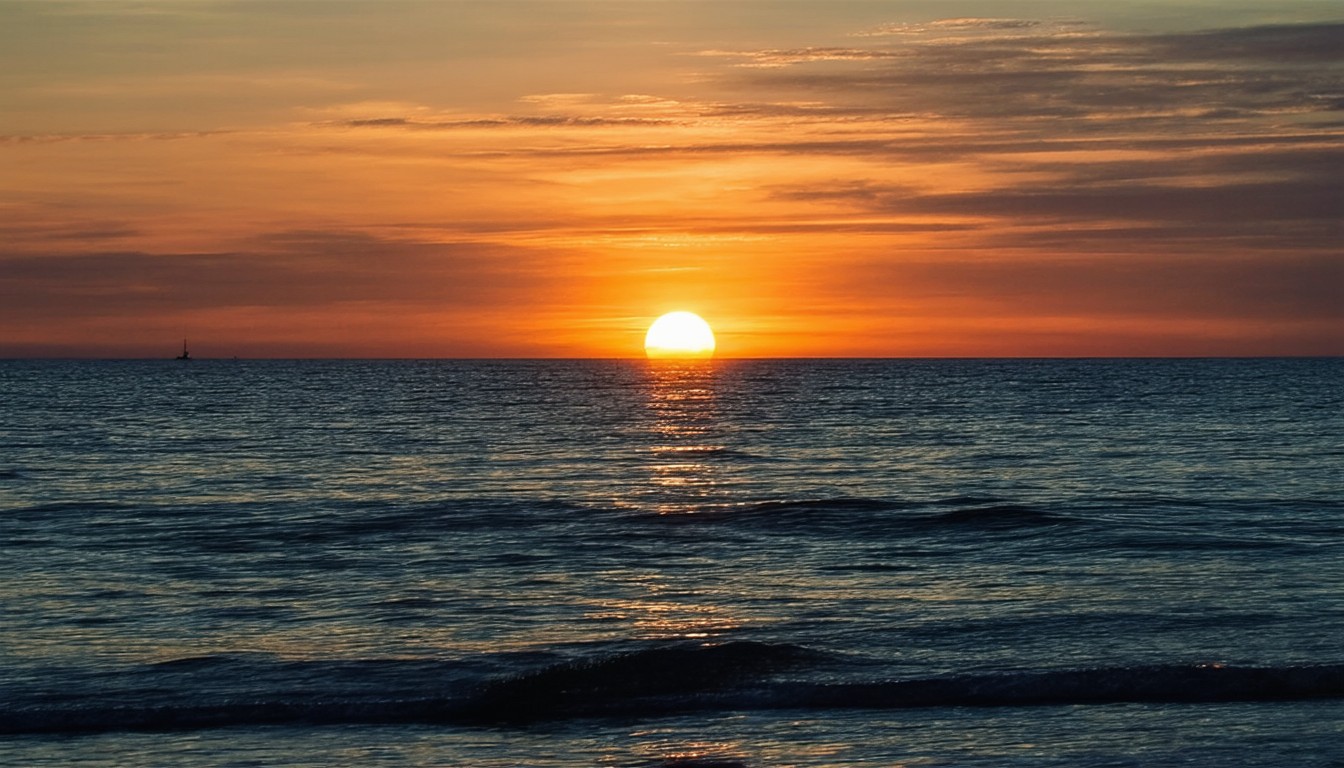
Few daily phenomena inspire as much awe or practical interest as sunset. Whether planning an evening hike, a family picnic, or a moment of reflection, knowing what time sunset will occur is a key part of organizing countless activities. Yet, the science behind sunset timing is as intricate as it is beautiful, influenced by geography, astronomy, and even technological advances. The question “What time is sunset?” opens a world of context that reaches far beyond the horizon.
What Determines the Time of Sunset?
The precise moment the sun dips below the horizon is a marvel of celestial mechanics. Sunset time is determined by several interacting factors:
- Latitude: Locations closer to the poles experience more extreme changes in sunset times throughout the year, while places near the equator see relatively steady patterns.
- Longitude: Local time zones can shift sunset by up to an hour, even for towns a short distance apart.
- Date: The Earth’s tilt and orbit create varying day lengths, peaking at summer and winter solstices.
- Elevation: Higher altitudes may reveal more of the sun before it disappears below the curve of the Earth.
Trading sunset times between New York and Los Angeles illustrates this perfectly: on any given day, sunset in LA can be nearly three hours after New York, despite both cities sharing similar latitudes.
The Equation of Time: Why Clocks and the Sun Disagree
Even clocks and calendars offer only rough guides to sunset, given the “equation of time.” This astronomical concept acknowledges that the length of a solar day—midday to midday—actually shifts slightly throughout the year.
“The earliest sunset does not coincide with the shortest day of the year, a subtlety explained by the equation of time and Earth’s elliptical orbit,” says Dr. Jackie Faherty, a senior astrophysicist at the American Museum of Natural History.
For example, in many northern cities, the earliest sunset typically occurs in early December, several weeks before the winter solstice.
How to Find Today’s Local Sunset Time
Beyond traditional newspaper listings, digital solutions now make discovering local sunset times both accurate and effortless. These include:
- Dedicated apps: Apps like Time and Date, The Weather Channel, and suncalc.org offer real-time sunset data globally.
- Voice assistants: Queries to devices with Siri, Alexa, or Google Assistant yield instant answers tailored to your location.
- Local news and weather websites: Most major outlets now display sunset and sunrise information alongside forecasts.
- Astronomical societies and planetarium websites: These often provide tables or calculators for precise, location-based sunset times.
For those who crave transparency, organizations like the United States Naval Observatory publish comprehensive annual tables, a mainstay for researchers and navigators alike.
Accuracy in the Age of Smartphones
With the rise of location-aware technology, real-time adjustments for daylight saving changes and precise GPS positioning have shrunk the margin of error for sunset calculations. Practical uses span from aviation scheduling to optimizing lighting for filmmakers capturing “golden hour.”
Why Sunset Timing Matters Across Cultures and Industries
Sunset is more than the close of daylight; it plays a strategic and emotional role worldwide. The implications are surprisingly broad:
In Everyday Life
- Religious observation: Many faiths, like Islam and Judaism, base rituals on sunset’s exact timing, from fasting hours during Ramadan to marking the Sabbath.
- Travel and safety: Outdoor enthusiasts often plan excursions to maximize daylight, while cities factor in sunset for scheduling street lighting and security patrols.
- Health and wellness: Studies suggest that exposure to natural light impacts sleep cycles and mental health, highlighting the importance of tracking day’s end.
In Business and Science
- Agriculture: Farmers use sunset data to schedule planting, harvesting, and livestock management.
- Media and entertainment: Photo shoots and film crews plan production to capture key moments before and after sunset, often referred to as “magic hour” for its unique quality of light.
- Aviation and transportation: Pilots and logistics managers depend on accurate sunset information for safe operation, especially in locations with limited artificial lighting.
Global Variation: How Sunset Times Shape Human Experience
The diversity of global sunset times shapes culture, economics, and even national policies.
Case Study: Scandinavia vs. Equator
In Scandinavian countries like Norway, the summer sun barely sets—producing the famous “Midnight Sun.” Conversely, equatorial cities such as Nairobi see sunset hover around the same time all year, with day and night nearly split.
This has practical effects: Scandinavian businesses may extend retail hours in summer, while cultural events in equatorial nations are synchronized with reliably predictable sunsets.
Daylight Saving Time and Political Decisions
Daylight saving policies have sparked debate across continents. The goal is typically to “harvest” more daylight for social or economic activity, pushing sunset later into the evening during summer months. Though popular in regions with highly variable day lengths, its utility remains contested in equatorial areas.
The Science and Beauty of Sunset Colors
While the time the sun sets is a matter for charts and apps, the spectacle itself is a product of atmospheric physics. As sunlight travels through a thicker layer of the atmosphere at sunset, shorter blue and green wavelengths scatter, leaving longer red and orange hues to dominate the sky.
Air quality, humidity, and volcanic events can further intensify or mute sunset colors. For example, after major volcanic eruptions, sunsets worldwide have been known to glow with unusual brilliance due to fine particles in the upper atmosphere.
“A sunset’s beauty is a gift not just of time, but of the unique chemistry and physics of the moment,” reflects Dr. Faherty. “That’s why each one feels so singular, and why searching for the day’s exact sunset time is about anticipation as much as precision.”
Ways to Make the Most of Sunset
Sunset-watching has evolved into a form of mindfulness and celebration. Parks, beaches, and scenic overlooks become gathering places for communities and travelers, united by the universality of the event but colored by local tradition.
Suggestions to mark sunset:
- Schedule moments of reflection, gratitude, or meditation at day’s end.
- Organize outings such as sunset picnics or boat rides.
- Use photography to document and appreciate the changing light.
Conclusion: The Value of Knowing Sunset Time
While the precise answer to “What time is sunset?” is right at one’s fingertips, understanding how and why it changes deepens appreciation for our planet’s rhythms. Beyond the practical benefits, tracking sunset connects us to natural cycles that have shaped humanity for generations. Whether for personal growth, community, or business planning, being mindful of sunset’s shifting schedule brings light to the close of every day.
FAQs
How do I find the sunset time for my specific location today?
You can check real-time apps or search engines using your city name, consult weather websites, or use smartphone voice assistants to get accurate sunset times based on your current GPS location.
Why does the sunset time change every day?
Sunset times shift daily due to the Earth’s tilt, orbit around the sun, and your location’s latitude, leading to longer or shorter days as the seasons progress.
Does daylight saving time affect when the sun sets?
Yes, daylight saving time moves clocks forward or backward by an hour during certain months, which changes the local sunset time without altering the sun’s schedule.
Do all countries observe daylight saving time?
Not all countries implement daylight saving time. Its use is mostly in North America, Europe, and parts of the Middle East, while many countries near the equator see little need for it.
What is “golden hour” and why is it important?
The period just before and after sunset is called “golden hour,” prized by photographers and filmmakers for its soft, warm light that enhances visuals.
Why do sunsets sometimes appear more colorful or vivid?
Atmospheric conditions, such as dust, humidity, or pollution, enhance the scattering of light, intensifying reds and oranges. Events like volcanic eruptions can also amplify sunset colors globally.

















Leave a comment