
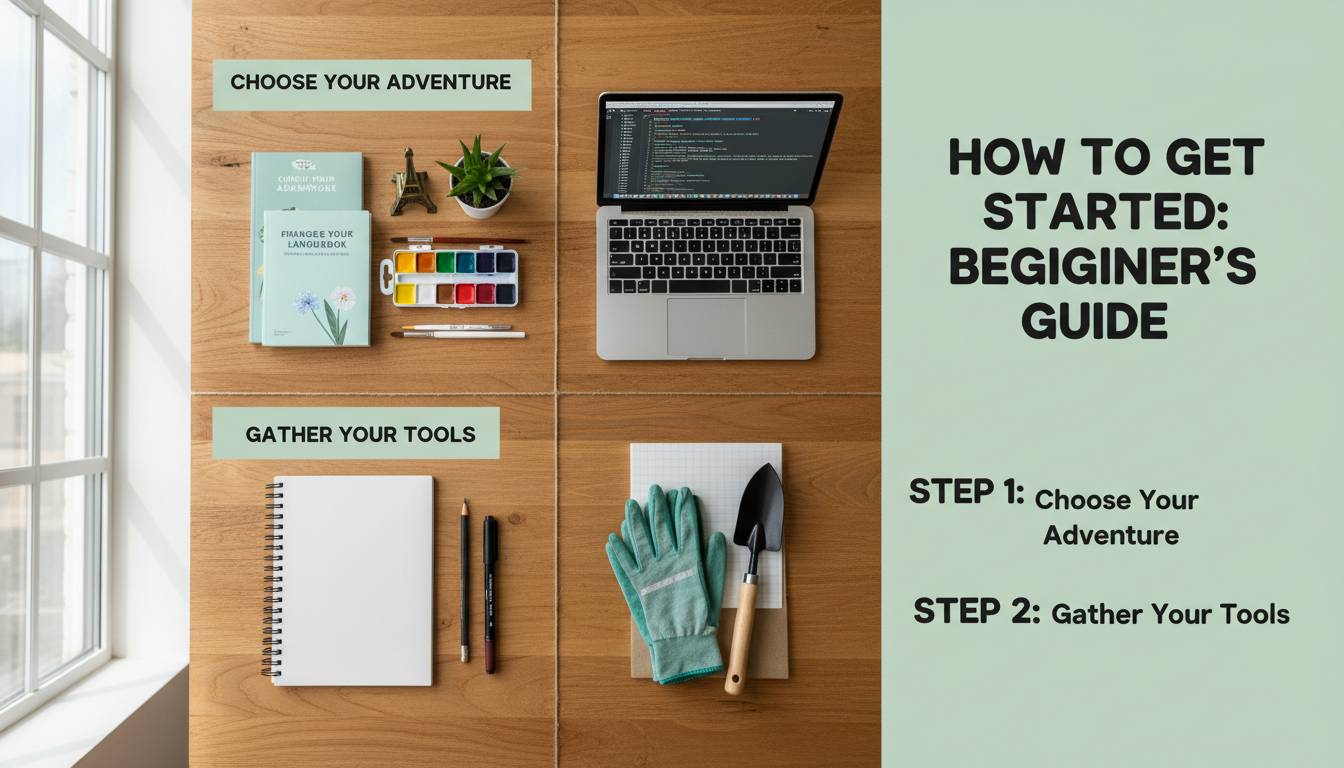
Starting something new can feel overwhelming. Whether you’re beginning a fitness routine, launching a small business, learning a new skill, or pursuing a personal project, the initial phase often determines long-term success. Research from the Dominican University of California shows that you’re 42% more likely to achieve your goals when you write them down and create an action plan. Yet despite this knowledge, many people struggle to move from intention to action.
This guide provides a comprehensive framework for getting started with any new endeavor. The principles outlined here apply across contexts—from professional ambitions to personal hobbies—because the psychology of beginning remains consistent regardless of the specific domain.
Understanding the Getting Started Challenge
The gap between wanting to do something and actually doing it represents one of the most significant barriers to personal progress. Psychologists call this the “intention-action gap,” and it exists because our brains are naturally wired to prefer immediate rewards over future benefits. When you imagine starting a new exercise routine, your brain focuses on how good you’ll feel in a few months. But when it’s time to put on your running shoes right now, your brain reminds you that the couch is comfortable and the Netflix show is still playing.
This resistance isn’t a character flaw—it’s evolution. Our ancestors survived by conserving energy for immediate threats. Modern life requires us to override these instincts constantly. Understanding this underlying mechanism helps because it removes shame from the equation. When you recognize that hesitation is biological rather than personal weakness, you can design systems that work with your brain rather than against it.
The getting started phase differs fundamentally from the maintenance phase. Beginning requires different strategies than continuing. Most advice about persistence assumes you’ve already started, which leaves beginners without proper guidance. This gap is where most people abandon their goals before they truly begin.
Defining Your Starting Point
Before taking any action, you need clarity about where you’re starting from and where you want to go. This sounds obvious, but most people skip this critical step. They jump into action without defining success, which leads to confusion, burnout, or pursuing goals that don’t actually matter to them.
Assessment involves taking inventory of your current situation. If you want to start exercising, this means honestly evaluating your current fitness level, available time, physical limitations, and resources. If you’re starting a business, it means understanding your financial situation, skills, network, and the market landscape. This honest assessment prevents the disappointment that comes from unrealistic expectations.
Goal definition transforms vague aspirations into specific targets. Instead of “I want to get healthier,” define what that means: “I want to walk 10,000 steps daily and cook dinner at home five nights per week.” Specificity serves two purposes. First, it makes progress measurable—you’ll know immediately whether you’re succeeding. Second, specificity activates the brain’s planning systems more effectively than abstract goals.
Scope determination sets boundaries around your initial effort. New beginnings often fail because people try to do too much too quickly. Starting small isn’t just about avoiding overwhelm—it’s about building momentum through early wins. Decide what minimum viable effort looks like, knowing you can expand later.
Building Your Foundation
Success in any new endeavor requires certain foundational elements. These basics apply universally, though their specific forms change based on your activity.
Environment design shapes your behavior more than most people realize. Your surroundings either support your new habit or work against it constantly. If you want to start reading more, place books on your nightstand, remove the TV from your bedroom, and keep a book in your bag for waiting periods. If you want to eat healthier, stock your refrigerator with healthy options and move unhealthy foods to harder-to-reach locations. The principle is simple: make the desired behavior easy and the undesired behavior difficult.
Tool preparation ensures you’re ready to act when motivation strikes. Motivation is unreliable—it comes and goes based on sleep, stress, and countless other factors. Having your tools ready means you can act regardless of how you feel. This might mean laying out workout clothes the night before, pre-chopping vegetables for healthy meals, or having all necessary software installed before starting a new skill.
Knowledge acquisition provides the confidence to begin. One reason people procrastinate is fear of looking foolish or making mistakes. Having basic knowledge reduces this anxiety. Before starting, spend dedicated time learning fundamentals through books, courses, videos, or mentorship. This investment pays dividends quickly because it accelerates your initial progress.
Taking the First Action
The most critical moment in any new endeavor is the first action. Everything after this builds on momentum generated by that initial step. Understanding how to engineer this first action dramatically increases your chances of success.
Micro-actions remove the intimidation factor from starting. Instead of “run a marathon,” your first action might be “put on running shoes and walk around the block.” The goal isn’t meaningful progress yet—it’s simply proving to yourself that you can begin. Once you’ve taken this small step, the psychological barrier often decreases significantly.
Timing optimization aligns your first action with favorable conditions. Most people try to start new things on Mondays, which makes sense logically but often fails practically. Mondays represent the beginning of the work week when demands are highest. Instead, identify your personal peak energy times. For many people, this is early morning before other obligations accumulate. Others perform better in the evening after work. Match your starting action to your natural rhythms.
Accountability structures increase the cost of not acting. This might involve telling a friend about your goal, joining a community of people pursuing similar aims, or using technology that tracks and shares your progress. The social dimension adds emotional weight to your commitment that self-talk alone cannot create.
Navigating Early Obstacles
The first days and weeks of any new endeavor present specific challenges that derail many beginners. Anticipating these obstacles allows you to prepare responses before discouragement sets in.
Motivation fluctuation surprises many beginners who expect enthusiasm to build steadily. Instead, motivation typically follows a wave pattern—high at the beginning, dropping significantly within the first two weeks, then gradually recovering. This “motivation valley” coincides with the transition from novel enthusiasm to genuine practice. Understanding this pattern prevents people from interpreting normal fluctuations as signs they should quit.
Time scarcity emerges as the reality of daily life collides with new commitments. Eventually, something has to give. Successful beginners plan for this collision rather than hoping it won’t happen. They identify which existing activities will be reduced or eliminated to make room for new priorities. Without this explicit decision, new activities compete with established obligations and usually lose.
Self-doubt activates particularly strongly when we try something new because we’re forced to confront our inexperience. Everyone feels incompetent at first—this is the universal human experience of learning. The key is recognizing that discomfort doesn’t indicate inadequacy. It indicates growth. When you feel like an imposter, remember that feeling like a beginner is a prerequisite for becoming experienced.
Measuring and Adjusting
Beginning without a system for tracking progress leads to drifting. Without measurement, you can’t know whether your efforts are working, and you lose the motivation that comes from seeing improvement.
Metric selection determines what you track. Choose one or two primary measures that directly reflect your goal. For fitness, this might be workout frequency or distance covered. For skill development, it might be practice hours or specific milestones achieved. Avoid the temptation to track everything—this creates data without insight.
Progress documentation makes improvement visible. Taking photos, keeping journals, or maintaining simple logs creates a record you can review during difficult periods. When you feel like nothing is changing, documented evidence counteracts this perception and reminds you how far you’ve come.
Iterative adjustment treats your initial approach as a hypothesis to be tested rather than a permanent commitment. The best beginners expect to adjust their strategies multiple times. What works in theory often requires modification in practice. This flexibility isn’t failure—it’s wisdom.
Maintaining Forward Momentum
Getting started is only the beginning. Once you’ve taken initial action, different strategies help you continue effectively.
Habit stacking attaches new behaviors to existing routines. Rather than trying to create motivation from nothing, leverage habits that already exist. After I pour my morning coffee, I will write for ten minutes. After I tie my running shoes, I will do five stretching exercises. Existing habits serve as triggers that launch new behaviors automatically.
Reward engineering provides the immediate gratification your brain craves. Long-term benefits are insufficient motivation for most people. Successful beginners create immediate rewards that reinforce their new behaviors. This might involve enjoying a particular podcast only during workouts, treating yourself to something pleasant after completing milestones, or simply allowing feelings of pride and accomplishment.
Progress celebration acknowledges achievements along the way. Many people wait to celebrate until they reach their ultimate goal, which means going months or years without recognition. This approach drains motivation. Instead, celebrate incremental progress regularly. These celebrations strengthen the identity of someone who follows through, which supports continued action.
Frequently Asked Questions
How do I overcome the fear of starting something new?
Fear of starting typically stems from fear of failure or looking incompetent. The most effective approach is taking such a small first step that failure becomes impossible. If you want to start running, your first action might simply be putting on athletic clothes. This removes the stakes from the initial moment while building the habit of taking action.
What if I keep procrastinating on getting started?
Procrastination often indicates the goal isn’t genuinely motivating or the task feels too overwhelming. Break your goal into smaller pieces until the first piece feels manageable. Also, examine whether you’re trying to start for external reasons rather than internal motivation—sustainable action requires genuine desire, not obligation.
How long does it take to form a new habit?
Research from University College London suggests it takes an average of 66 days to form a new habit, though this varies significantly based on the behavior and individual. The first few weeks require the most effort, after which actions become more automatic. Starting with too much intensity usually leads to burnout before this automaticity develops.
Should I start with small steps or jump fully into my new endeavor?
For most people, starting small produces better long-term results. Gradual beginning allows you to build confidence, identify obstacles, and develop systems without overwhelming your existing life. However, some circumstances require immediate full commitment—especially when external deadlines or opportunities create urgency.
How do I know if I’m progressing correctly?
Establish clear metrics before you begin and track them consistently. Without measurement, progress becomes subjective and easy to dismiss. If your chosen metrics aren’t moving after reasonable effort, adjust your approach rather than your goal. The strategy might be wrong while the goal remains valid.
What should I do when I hit a plateau early in my journey?
Plateaus are normal and usually temporary. First, ensure you’re still taking action—plateaus often follow periods of rapid early progress that were partially attributable to enthusiasm rather than sustainable practice. Second, examine whether your approach needs adjustment. Third, seek feedback from others who have succeeded in similar endeavors. Most importantly, continue showing up even when results seem stagnant.

















Leave a comment